Why Creatine Is the Most Researched Supplement in Sports Nutrition
Creatine monohydrate has decades of peer-reviewed research behind it. It's one of the few supplements with consistent, replicated evidence for improving strength, power output, and muscle recovery. But despite its popularity, there's still a lot of confusion around how much to take and when.
Here's a straightforward breakdown.
The Standard Maintenance Dose
For most people, 3–5 grams of creatine monohydrate per day is the evidence-backed maintenance dose for muscle performance. This is enough to keep your muscle creatine stores saturated over time, which is where the strength and power benefits come from.
You don't need to cycle creatine or take breaks. Consistent daily use is what produces results.
The Case for 10g Per Day: Muscle + Cognitive Benefits
Emerging research is making a compelling case for a higher daily dose of 10 grams — 5g targeting muscle performance and an additional 5g to support cognitive function.
Here's why: creatine isn't just a muscle fuel. Your brain also relies on phosphocreatine for energy, particularly during mentally demanding tasks, sleep deprivation, or high-stress periods. Several recent studies have found that higher creatine doses (in the 5–10g range) can improve working memory, processing speed, and mental fatigue resistance — benefits that the standard 3–5g dose may not fully deliver.
A practical split for 10g/day:
-
5g post-workout — to support muscle recovery and creatine resaturation after training
-
5g at another time (morning or evening) — to maintain elevated brain creatine levels throughout the day
This approach is well within the safety profile established by long-term creatine research and is increasingly common among athletes who also want the cognitive edge.
Creatine After Poor Sleep: The Case for 20–30g
One of the more striking areas of recent creatine research involves sleep deprivation. Studies have found that taking 20–30g of creatine acutely — on days following poor or insufficient sleep — can significantly blunt the cognitive and physical performance decrements that normally accompany sleep loss.
The mechanism makes sense: sleep deprivation depletes brain phosphocreatine stores, and a higher acute dose helps restore them more rapidly. Research from the University of Sydney and others has shown improvements in mood, reaction time, and cognitive performance after a single high dose taken the morning after a bad night's sleep.
Important caveats:
- This is an acute strategy, not a daily protocol — 20–30g every day is unnecessary and may cause GI discomfort
- Split the dose across the day (e.g., 5–6g every 2–3 hours) to minimize stomach upset
- Stay well hydrated, as higher doses increase water demand
- This doesn't replace sleep — it's a performance buffer, not a substitute
For athletes, shift workers, or anyone who occasionally runs on limited sleep, this is a practical, evidence-informed tool worth knowing about.
Should You Do a Loading Phase?
A loading phase involves taking a higher dose (typically 20g/day, split into 4 x 5g doses) for 5–7 days to saturate your muscles faster. After loading, you drop back to your maintenance dose.
Does it work? Yes — loading gets you to full saturation faster (about a week vs. 3–4 weeks at 5g/day). But if you're patient, skipping the loading phase and going straight to your target dose gets you to the same place. Loading can also cause temporary water retention and, in some people, mild GI discomfort.
Our recommendation: Skip the loading phase unless you have a specific event or competition coming up soon. Start at 5–10g daily and stay consistent.
What I Actually Do (And Why Consistency Beats Timing)
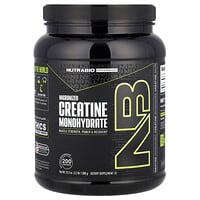
Personally, I take 10g of NutraBio Creatine Monohydrate every day — no loading phase, no strict timing protocol. Most days it's post-workout, but honestly? Some days it's first thing in the morning, some days it's mid-afternoon at my desk, and occasionally it's before bed. The point is I take it every single day without fail.
That's the real secret with creatine: it's a long game. The benefits come from sustained saturation, not from hitting a perfect 30-minute post-workout window. If obsessing over timing is what's stopping you from being consistent, let it go. Just take it.
When Should You Take Creatine?
Timing matters less with creatine than with other supplements. Because it works by saturating your muscles (and brain) over time, the exact moment you take it isn't critical. That said, research slightly favors post-workout timing for muscle uptake.
The most practical approach: take it whenever you'll remember to take it consistently. Many people split their dose — one serving post-workout, one with breakfast or before bed.
Can You Stack Creatine With Protein?
Absolutely. Creatine and protein work through different mechanisms and complement each other well:
-
Creatine supports ATP regeneration, strength, power output, and cognitive function
-
Protein provides the amino acids needed for muscle repair and growth
A simple post-workout stack: mix 5g of NutraBio Creatine Monohydrate into your ISO-3D Hydrolyzed Whey Protein shake. Both dissolve easily and there's no taste conflict.
Does Creatine Cause Water Retention or Bloating?
Creatine draws water into your muscle cells — this is actually part of how it works and is a sign it's doing its job. You may notice a slight increase in scale weight (1–2 kg) in the first few weeks, but this is intramuscular water, not subcutaneous bloating.
If you experience GI discomfort at higher doses, try splitting your intake into smaller servings (e.g., 2.5–5g every few hours) and ensure you're drinking plenty of water throughout the day.
Who Should Take Creatine?
Creatine is well-suited for:
- Anyone doing resistance training or high-intensity exercise
- Athletes looking to improve strength, power, or sprint performance
- People who want cognitive support during demanding work, study, or competition
- Shift workers or anyone managing irregular sleep schedules
- People in a caloric deficit who want to preserve muscle mass
- Older adults — research supports creatine for both muscle preservation and cognitive health with age
It's one of the safest and most cost-effective supplements available. If you're not taking it, you're likely leaving both physical and mental performance on the table.
Why Creatine Quality Matters
Not all creatine is the same. Cheaper products can contain impurities like creatinine, dicyandiamide, and dihydrotriazine — byproducts of low-quality manufacturing. This is where ingredient sourcing matters.
NutraBio Creatine Monohydrate uses PharmaPure™ creatine — a pharmaceutical-grade creatine monohydrate that meets strict purity standards, with independent third-party testing to verify what's on the label is what's in the product. No fillers, no proprietary blends, no underdosing. Just pure creatine at the dose you need.
When you're taking 5–10g daily — or up to 20–30g on high-demand days — purity isn't a nice-to-have, it's essential.
Get Started
Pick up NutraBio Creatine Monohydrate with PharmaPure™ creatine — pure, unflavored, and fully transparent. Start at 5g daily, work up to 10g for the full muscle and cognitive benefit stack, and keep a higher dose on hand for those days when sleep didn't go as planned.